

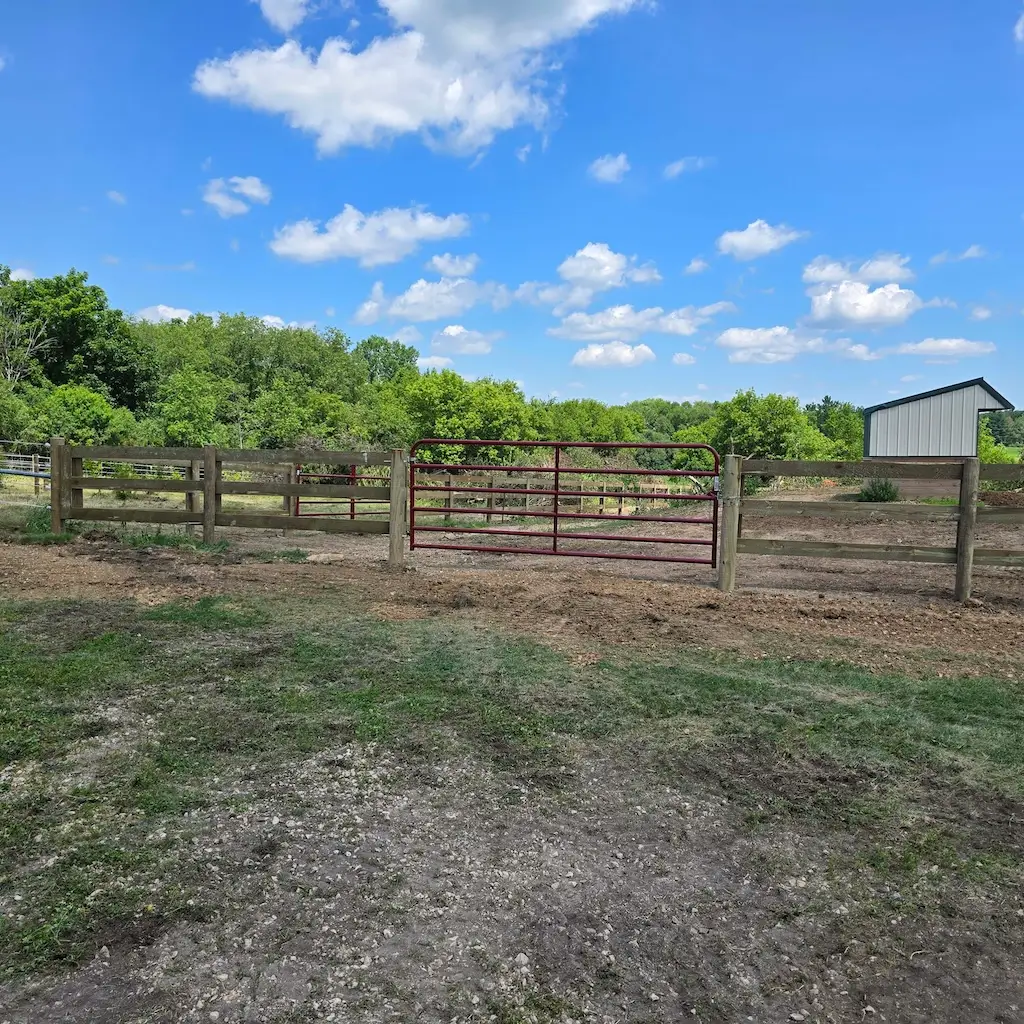
Running a livestock operation in Wisconsin involves more than feeding schedules and veterinary visits. The daily reality of managing cattle, horses, or other animals on a working farm comes down to systems, infrastructure, and consistent habits that keep animals healthy, contained, and productive through every season.
Wisconsin’s climate adds its own layer of pressure, with cold winters, wet springs, and summer heat all creating conditions that test both the animals and the property they live on.
H&S Fencing & Supply is a Wisconsin fence company serving agricultural and farm properties across Southern Wisconsin and the surrounding region. Our team specializes in agricultural fence installation, along with a full range of farm products and custom fabrication built specifically for working properties.
Keep reading for a practical look at what effective livestock management actually requires and how the right infrastructure supports it from the ground up.
Start With Containment That Actually Holds
Every other aspect of livestock management depends on your ability to keep animals where they belong. A containment system that fails regularly creates safety risks, damages your land, and costs you time you do not have.
The foundation of effective containment is a fence system matched to the specific animals on your property and the terrain it crosses.
Different animals place different demands on a fence:
- Cattle need height and tensile strength to hold against leaning and pushing pressure
- Horses require smooth surfaces without protrusions that can cause injury on contact
- Smaller livestock like sheep and goats need tighter mesh spacing to prevent escapes and predator entry
- Multi-species properties benefit from a layered approach that addresses the needs of each animal type within the same perimeter
An agricultural fence that matches those demands does not just contain your animals. It reduces the daily management burden of checking, repairing, and responding to breaches caused by a poorly matched fence system.
Rotational Grazing Requires the Right Infrastructure
Rotational grazing is one of the most effective practices for maintaining pasture health and animal condition over the long term. Moving animals between pasture sections on a regular schedule allows each section to recover, maintains higher forage quality throughout the grazing season, and reduces parasite pressure.
Making rotational grazing work in practice requires the infrastructure to support it. That means more than a perimeter fence. It means a system of cross-fencing that divides your property into manageable paddocks, gates positioned at practical points for moving animals efficiently, and a layout designed around how your operation actually functions.
A farm without that infrastructure is limited in its ability to implement rotation, regardless of how well the animals are otherwise managed.
Feed Management and Farm Products That Reduce Daily Labor
How and where animals eat directly affects both their health and the condition of your land. Animals that feed from the ground in uncontrolled areas compact soil, waste feed, and create conditions where disease transmission is more likely.
Managed feeding with the right equipment reduces those risks and makes your daily routine more efficient.
Bale feeders are one of the most practical investments a livestock owner can make. A well-designed bale feeder keeps hay off the ground, reduces feed waste, helps limit exposure to contaminants such as urine and manure, and promotes healthier feeding conditions. Here is what the right feeding setup delivers for a working farm:
- Reduced feed waste that lowers overall input costs across a season
- Better animal condition from more consistent and cleaner access to forage
- Less soil damage in feeding areas from reduced ground contact with hay
- Lower labor requirements for feeding and cleanup compared to unmanaged ground feeding
H&S Fencing & Supply carries bale feeders and freestanding fence panels as part of its farm product inventory, giving property owners access to the equipment and materials that make daily livestock management more manageable.
Biosecurity Starts at the Property Line
Keeping disease out of a herd is significantly easier than managing it once it arrives. Biosecurity on a working farm covers everything from how new animals are introduced to how traffic moves through the property. The basics that make the most difference include:
- Quarantining new animals for a minimum of 30 days before introducing them to the existing herd
- Keeping feed storage areas closed off from wildlife that can introduce pathogens
- Sanitizing equipment and trailers before and after transport
- Working with a veterinarian to maintain a current vaccination and deworming schedule
Physical infrastructure supports biosecurity in ways that management practices alone cannot. A well-fenced property with controlled entry points limits the pathways through which disease vectors, including feral animals and unauthorized vehicles, can reach your livestock.
Water Access and Air Quality on the Property
Water and air quality are two of the most overlooked drivers of livestock health on working farms. Animals that drink from contaminated standing water or that are housed in poorly ventilated areas face higher rates of illness, slower growth, and reduced productivity.
Water, shelter, cleanliness, and low-stress handling are the core components of sound livestock management, and water quality sits at the top of that list. Practical steps that improve water and air quality on a farm property include:
- Eliminating standing water sources that accumulate manure or runoff contamination
- Positioning water access points away from high-waste areas
- Ensuring housing structures have adequate air exchange to reduce moisture and ammonia buildup
- Inspecting water sources and feed areas regularly for signs of contamination
Wisconsin’s Seasons Demand Year-Round Planning
Wisconsin farms face a full seasonal range that creates distinct challenges at every point in the year. The spring thaw brings saturated ground and mud, which stresses both animals and infrastructure.
Summer heat increases water demands and parasite pressure. Fall marks the start of the feeding transition as pasture quality declines. Winter puts structural pressure on fencing, housing, and equipment while limiting animal movement and increasing feeding requirements.
Planning for each season before it arrives reduces the reactive scrambling that costs time and money on a farm. Fence lines that have shifted or weakened during spring ground movement need attention before animals test them.
Feeding equipment needs to be in place before winter feeding begins. Water systems need winterization before the first hard freeze. A working farm property that is properly set up for each season runs more smoothly and requires less emergency intervention throughout the year.
Build Your Farm Property With the Right Partner
Effective livestock management comes down to having the right systems and infrastructure in place. H&S Fencing & Supply is a trusted agricultural fence installer and farm product supplier serving working properties across Southern Wisconsin.
The team brings expertise in NRCS and USDA standards and backs every installation with a five-year workmanship warranty. Installations are typically completed within one to two weeks, and free estimates are available for new projects.
Call (608) 732-4260 or contact us online to get started today.